The Living Underground: What Nematodes and Soil Microbes Reveal About Land Health
Beneath the Surface of Standard Soil Chemistry
A conventional soil test can tell you important things about acidity, available nitrogen, phosphorus, potassium, salinity, and sometimes organic matter. Yet those numbers provide only a partial view. A field may show an acceptable nutrient reading while still suffering from compaction, poor aggregation, weak root growth, low microbial activity, or a disrupted soil food web. In that situation, nutrients may be present but poorly cycled, easily leached, or unavailable when plants need them most.
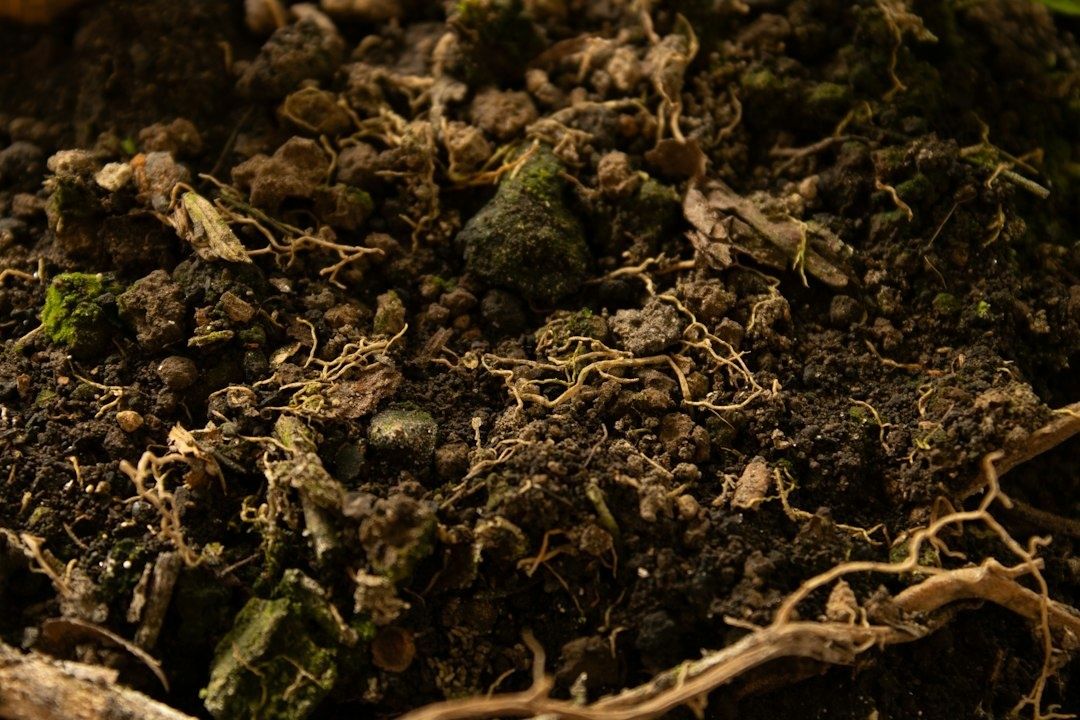
Soil is better understood as a living network than as an inert chemical sponge. Roots release carbon compounds into the rhizosphere, fungi extend through pores, bacteria process fresh organic matter, protozoa and nematodes graze on microbial populations, and larger organisms redistribute nutrients through the soil profile. The Natural Resources Conservation Service guidance on living soil describes soil health as the continuing capacity of soil to function as a vital ecosystem that sustains plants, animals, and people. That perspective shifts attention from isolated fertilizer applications toward the organisms that build structure, regulate nutrient release, retain water, and help land recover from stress.
The Microscopic Food Web Powering Nutrient Cycles
Nematodes are among the most useful organisms for seeing this underground economy. They are microscopic, thread-shaped animals occupying several feeding levels. Bacterial-feeding nematodes consume bacteria that have multiplied around fresh roots, manure, compost, and other carbon sources. Fungal-feeding nematodes graze on fungal hyphae, while predatory and omnivorous species feed on other nematodes and small soil organisms. As these animals digest their food, nutrients held in microbial biomass are released in forms that plants can more readily access.
Protozoa perform a related grazing function. By feeding on bacteria, they accelerate the movement of nitrogen and other nutrients through the rhizosphere. Predatory nematodes and other higher-level consumers add regulation. They can reduce the dominance of particular microbial populations and help prevent any one group from overwhelming the food web. This does not mean that every predator directly eliminates a crop pathogen. Rather, a diverse community creates competition, consumption, and habitat complexity that can make disease-promoting conditions less likely.
A review in soil nematode research identifies abundance, diversity, feeding groups, life-history strategies, and metabolic activity as useful indicators of disturbance and soil function. Broader ecological investigations demonstrate how microbial community balance and microfaunal grazers stabilize nutrient availability under changing environmental conditions. For field interpretation, the key biological guilds include:
- Bacterial feeders, which help process readily available carbon and contribute to mineral nitrogen release.
- Fungal feeders, which participate in decomposition pathways often associated with more complex plant residues and stable soil structure.
- Predatory and omnivorous nematodes, which signal a more developed food web and provide top-down regulation.
- Plant-parasitic nematodes, which can indicate crop stress and, at high levels, directly damage roots.
- Decomposer fungi and bacteria, which transform residues into microbial biomass, humus-like compounds, and nutrients that can be retained in aggregates.
Healthy soil does not require the complete absence of plant-parasitic nematodes or any single microbial group. Function depends on balance, habitat, and context. A biologically active soil may contain potential pests, but diverse roots, predators, competing microbes, and adequate organic matter can prevent those populations from becoming dominant. This is why nematode community structure is more informative than a single organism count.
Subterranean Architecture Across Grasslands and Degraded Cropland
Intact prairie offers a useful reference because it combines continuous living roots, varied plant chemistry, deep rooting patterns, and minimal disturbance. Those conditions tend to support a layered pore system and a diverse microbial habitat. Fungal networks can bind particles into aggregates, while roots and decaying channels create pathways for air and water. Heavily tilled or intensively fertilized cropland may still produce strong short-term yields, but repeated disturbance and limited plant diversity can reduce habitat continuity, weaken aggregates, and simplify the organisms responsible for nutrient cycling.
Research teams studying Missouri and Kansas prairie soils are comparing microbial communities from relatively undisturbed grasslands with those from heavily farmed land. A landmark microbial ecology study examining root pathogen diversity across these grassland climate gradients demonstrates how environmental filtering, land disturbance, and host specificity fundamentally alter fungal and oomycete community composition. These projects are investigating how soil microbiomes influence plant diversity, fertility, and resilience under altered rainfall patterns. The contrast should not be treated as a simple choice between prairie and production. Instead, it offers a design lesson: farms can borrow ecological functions from grasslands by maintaining living roots, diverse plant communities, and fewer disruptive events.

| Management setting | Aggregate stability and porosity | Biological community | Root matrix integrity |
|---|---|---|---|
| Intact or well-restored prairie | Usually more continuous pore networks and stronger aggregate protection | High plant and microbial diversity, with multiple nematode feeding groups | Deep, overlapping roots provide habitat across seasons |
| Diverse perennial pasture | Often good surface cover and improving structure, depending on grazing and traffic | Mixed bacterial and fungal pathways supported by varied residues | Persistent roots shelter organisms during dry or hot periods |
| Annual rotation with cover crops | Potentially improving, especially when residue remains and tillage is reduced | Greater seasonal food supply than a bare fallow system | Root continuity depends on rotation timing and cover-crop survival |
| Repeatedly tilled, simplified cropland | More vulnerable to crusting, compaction, erosion, and rapid aggregate breakdown | Often reduced diversity and a greater dependence on external nutrient inputs | Short-lived root habitat with exposed periods between crops |
Deep-rooted plants are especially important during climatic extremes. Their roots open channels below the surface, while living cover shades soil and reduces evaporation. During wet periods, connected pores help water move downward rather than run across the field. During drought, protected aggregates and deeper roots improve access to stored moisture. The result is not immunity from climate stress, but a larger margin for recovery.
Field Diagnostics to Read Biological Activity on Your Land
Field observations cannot replace laboratory analysis, but they can reveal patterns quickly and inexpensively. A useful assessment combines physical, chemical, biological, morphological, and visual indicators rather than relying on yield or one nutrient measurement. Always compare similar soil types, seasons, and moisture conditions. A wet, compacted sampling day and a dry, well-aerated sampling day will produce different impressions even when management has not changed.
An aggregate slump test offers a simple view of structural stability. Place several intact soil aggregates in a transparent jar or container of water and observe them over several minutes. Stable aggregates retain their shape, while weak aggregates disperse into cloudy sediment. The test is comparative rather than diagnostic: sample a high-performing area, a field average, and a visibly degraded patch. Bait-lamina strips provide another field-accessible measure. These narrow strips contain small portions of plant material and are inserted vertically into the soil. After a defined exposure period, the number of consumed bait points gives an indication of soil-feeding activity. Because activity can be low and uneven, replicate strips are essential, as field evaluation has shown.
- Map the land into management zones. Separate paddocks or fields by soil type, slope, drainage, crop history, traffic pattern, and visible productivity. Include both strong and weak areas rather than sampling only convenient locations.
- Record baseline conditions. Note recent rainfall, soil moisture, temperature, crop stage, grazing pressure, tillage, fertilizer applications, and ground cover. Photograph the surface before digging.
- Inspect a consistent soil volume. Dig a spade-sized section and examine aggregate shape, pore spaces, roots, earthworm channels, compaction layers, residue breakdown, and root color. Look for rhizosheaths, the soil particles that cling closely to fine roots and indicate active root-soil contact.
- Repeat simple biological tests. Use aggregate slumps, bait-lamina strips, earthworm counts, and residue observations at the same locations or within marked zones. Replication matters more than a single impressive sample.
- Send selected samples for laboratory analysis. Where possible, request organic matter, microbial biomass or respiration, and nematode community analysis alongside standard chemistry. A nematode report is most useful when it separates feeding groups and plant-parasitic forms.
- Review trends over time. Compare measurements seasonally and annually. Look for improving aggregation, deeper roots, faster but not excessive residue turnover, more earthworm channels, and a broader biological community.
Root inspection deserves particular attention. Healthy roots often show branching, fine root hairs, firm texture, and close contact with surrounding soil. Rhizosheaths can indicate an active rhizosphere, while frequent earthworm burrows suggest channels for air, water, and root exploration. Conversely, horizontal compaction layers, smeared pore walls, dark or decaying roots, and abrupt changes in root depth point toward physical or biological constraints that a nutrient test alone may miss.
Practical Interventions to Restore Underfoot Ecosystems
Restoration begins with reducing the conditions that repeatedly damage habitat. Excessive or poorly timed synthetic fertilizer can create nutrient imbalances, acidification, salt stress, and rapid microbial shifts, although mineral nutrients remain useful when applied according to crop demand and soil evidence. The strongest approach is usually balanced rather than ideological. A review of balanced fertilization reports that combining organic and mineral sources can increase microbial biomass, enzyme activity, nutrient retention, and resilience, while replacing part of mineral fertilizer with organic inputs may reduce losses without sacrificing yields in suitable systems.
- Match nutrients to real demand. Use soil tests, crop removal estimates, tissue observations, and yield goals to avoid routine applications that exceed plant needs.
- Feed the food web gradually. Apply mature compost, well-managed manure, crop residues, or other organic materials at rates suited to soil texture, drainage, and nutrient budgets.
- Keep roots present. Avoid unnecessary bare fallow periods and establish cover crops early enough for meaningful root development.
- Protect the surface. Residue and living cover reduce temperature swings, erosion, crusting, and moisture loss.
Multi-species cover crops create a wider range of habitats and carbon sources than a single species. Grasses can contribute fibrous roots and persistent residues; legumes can add biologically fixed nitrogen; brassicas may create large taproots and channels; and broadleaf species can diversify root exudates and microbial associations. The correct mixture depends on climate, livestock, planting window, termination method, and weed risk. Diversity is not a seed-count competition. A smaller mixture with species that establish reliably is more valuable than a complicated blend that fails to produce living cover.
Disturbance management is equally important. Tillage physically breaks hyphal networks and exposes organic matter to rapid oxidation. Heavy equipment on wet soil can compress pore space beyond the reach of shallow roots. Intensive grazing can remove cover and compact the surface if animals remain too long under unsuitable conditions. Reduced disturbance, managed traffic, rotational grazing where appropriate, and adequate recovery periods allow biological networks to rebuild. The NRCS identifies reduced disturbance, maximized soil cover, biodiversity, and living roots as central soil-health practices because they work together rather than as isolated techniques.
Cultivating the Underground Legacy of Tomorrow
Microfaunal abundance does not function as a single magic score, and more organisms are not automatically better in every situation. The useful signal lies in diversity, feeding structure, activity, and change over time. A soil with active bacterial and fungal pathways, predatory nematodes, stable aggregates, deep roots, and continuous cover is generally better positioned to cycle nutrients, retain water, and recover from drought. Those functions can reduce dependence on purchased inputs, improve nutrient-use efficiency, and protect the productive capacity of land across difficult seasons.
Begin with a baseline this season. Mark representative sites, photograph soil and roots, perform aggregate and earthworm observations, test biological activity with replicated bait-lamina strips, and pair field notes with laboratory chemistry where resources allow. Then choose one manageable intervention, such as extending living cover, reducing traffic on wet ground, diversifying a rotation, or recalibrating fertilizer applications. Revisit the same sites after a year. Long-term stewardship becomes visible when success is measured not only in yield, but also in porosity, roots, organisms, water movement, and the capacity of the land to support future generations.