
When the Night Glows: How Rural-Edge Wildlife Adapts to Artificial Light
The Quiet Threshold Where Darkness Breaks
At the rural edge, a property may sit only a short distance from a village road, workshop, farmyard, or residential cluster, yet still support a remarkably different night. This boundary is an ecological ecotone, a meeting place where hedgerows, field margins, woodland, gardens, drainage ditches, and built surfaces overlap. For bats crossing between roosts and feeding grounds, moths moving through pasture, frogs leaving a pond, or small mammals travelling beneath cover, the quality of this narrow strip can determine whether a habitat remains connected.
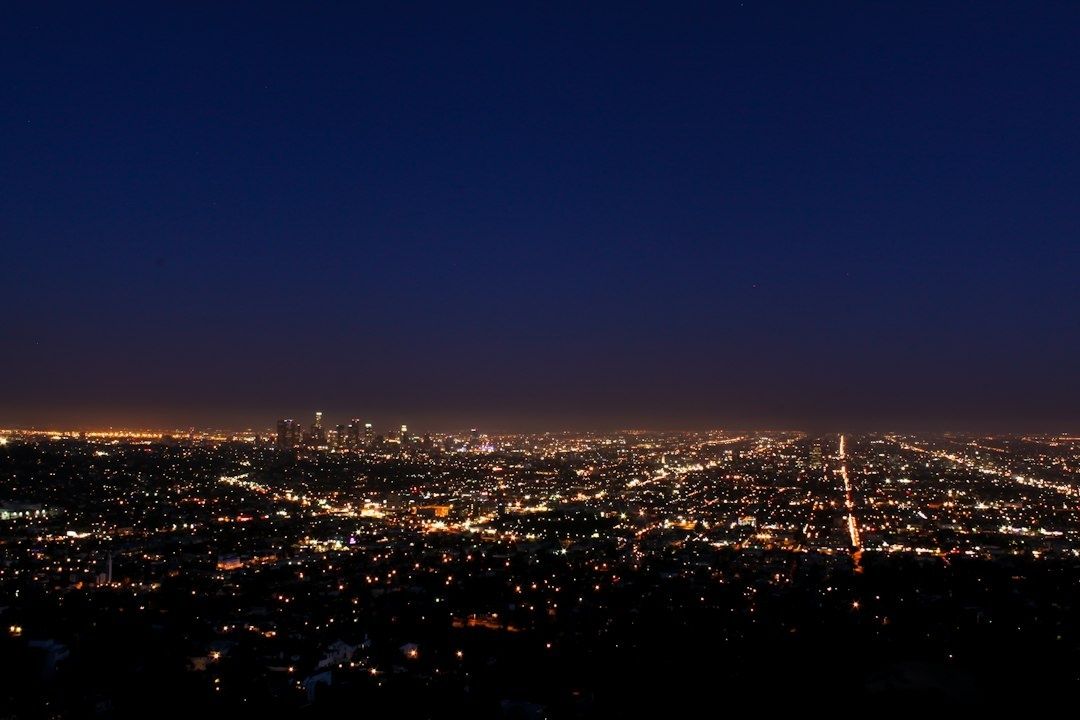
Artificial light at night changes that threshold. A bright security lamp, an exposed porch bulb, or a row of high-output fixtures does more than create skyglow or alter a rural view. It can act as an active ecological stressor and a permeable barrier, allowing some light-tolerant species through while discouraging others. Across smallholdings, acreage properties, and village fringes, unshielded lighting can redirect insects, interrupt migration, suppress foraging, and expose animals to predators. A National Park Service synthesis of artificial-light research brings together 618 relevant studies, showing how rapidly evidence has grown across insects, birds, bats, amphibians, mammals, fish, plants, and other wildlife.
How Luminescence Alters the Nighttime Food Web
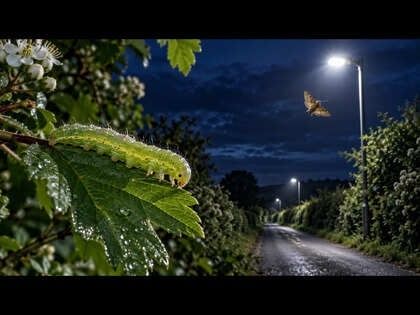
Many nocturnal insects evolved under a sky where the moon and stars provided distant, stable reference points. Moths and other flying insects can use transverse orientation, maintaining a roughly constant angle to a celestial light source as they travel. A nearby lamp overwhelms that system. Instead of following a straight path, an insect may spiral around the fixture, collide with a hot surface, remain exposed beneath the light, or exhaust its energy before reaching food, shelter, or a mate.
The result is often described as attraction, but attraction is only one part of the disturbance. Artificial light can produce temporal disorientation, spatial disorientation, desensitization, and failures in recognition. Nocturnal insects may emerge at altered times, miss flowers that open after dark, or fail to recognize mating signals. Fireflies, click beetles, and glowworms face an especially direct problem because artificial illumination can make their bioluminescent flashes harder to detect. A review in a scientific synthesis of nocturnal insect research emphasizes that intensity, color spectrum, and flicker all influence these effects.
Bright fixtures can create a light vacuum around field margins. Insects gather near the lamp rather than remaining distributed through hedges, woodland edges, pasture, and gardens. This removes pollination and decomposition activity from darker areas while concentrating prey in a small, exposed space. The consequences then move upward through the food web. Some bats and birds may exploit the temporary concentration of insects, while light-sensitive bats, amphibians, and small mammals avoid the illuminated zone entirely.
- Light-tolerant predators may gather around lamps and gain access to concentrated prey.
- Light-sensitive predators may abandon otherwise suitable feeding corridors.
- Insects drawn from field edges can reduce pollination and other ecosystem services in darker habitat.
- Species with different hunting strategies may no longer share the same nighttime space.
Research on bats and insects shows why a simple claim that lights “help bats feed” is misleading. In one study, insect biomass increased near artificial light, but bat responses differed by species and habitat structure. Larger bats sometimes exploited open illuminated areas, while smaller or more light-sensitive species depended on cluttered habitat and were less able to benefit. A lamp can therefore favor opportunistic hunters while excluding shy nocturnal foragers, producing a food web that is busier in appearance but poorer in balance.
The Biological Toll on Nocturnal Wildlife
Darkness is not an absence of information for wildlife. It is a biological signal. Natural light-dark cycles help animals decide when to feed, shelter, mate, migrate, reproduce, and prepare for seasonal change. Artificial light can interrupt photoperiodic cues, suppress melatonin, and shift circadian rhythms. These changes matter even when a light appears modest to a person standing beneath it, because many nocturnal animals have visual systems adapted to extremely dim conditions.
Amphibians may alter movement and calling behavior near illuminated ponds. Mammals can reduce nighttime foraging or change routes to avoid open, bright ground. Migratory birds may become disoriented by upward light and illuminated structures, particularly during periods of movement when natural navigation cues are already demanding. Reptiles, insects, plants, and aquatic organisms can also respond to altered nighttime conditions. The National Institute of Environmental Health Sciences overview of artificial lighting explains how light pollution can attract some animals, repel others, compromise wildlife corridors, and alter predator-prey relationships.
Perpetual twilight can suppress reproduction as well as feeding. An animal that delays emergence may miss peak insect abundance. A frog that calls less often may have fewer opportunities to attract a mate. A mammal that avoids an exposed crossing may spend more energy finding an alternative route, while a bird responding to false light cues may lose valuable time during migration. These effects do not need to cause immediate mortality to reduce population resilience. Repeated small disruptions can accumulate across seasons, especially where habitat is already fragmented by roads, fences, buildings, and intensive land use.
True darkness therefore functions as a habitat resource, much like clean water, leaf litter, or undisturbed nesting cover. It does not need to be perfectly continuous across an entire landscape to help. A connected series of darker hedgerows, woodland margins, pond edges, and fence lines can provide stepping stones through a developed rural fringe. Protecting those spaces is especially important because a single bright gap can discourage movement between otherwise suitable patches.
Evaluating Outdoor Light Fixtures for Sensitive Edges
Outdoor lighting does not have to be eliminated to become more wildlife-conscious. The central question is whether a fixture sends light exactly where it is needed, for exactly as long as it is needed. Traditional rural lighting often relies on exposed bulbs, broad floodlights, high mounting points, or constant operation. These arrangements illuminate roofs, tree lines, neighboring fields, and the sky in addition to the doorway, gate, or work area that requires visibility.
Wildlife-sensitive alternatives use lower output, warmer light, full shielding, and controls that prevent unnecessary operation. Warm-spectrum LEDs can reduce the blue-rich component associated with stronger skyglow and disruption, although no color temperature makes an excessive or badly aimed lamp harmless. Motion activation, timers, dimming, and manual switches are most effective when paired with sensible placement and careful aiming.
| Lighting feature | Higher-impact choice | More sensitive alternative |
|---|---|---|
| Direction | Unshielded or upward-facing fixture | Fully shielded, downward-facing fixture |
| Color | Blue-rich cool white light | Warm-spectrum light with limited blue content |
| Brightness | High lumen output across a wide area | Lowest practical output for the task |
| Timing | All-night operation | Short timer, dimming, or motion activation |
| Placement | Facing fields, hedges, ponds, or woodland | Directed toward entrances, steps, and work surfaces |
There is a genuine trade-off between visibility and ecological stewardship, but brighter does not always mean safer. Glare can reduce visual contrast, create dark pockets beyond the illuminated area, and make it harder to see movement at the edge of the beam. A well-aimed, lower-intensity fixture may provide better practical visibility than a powerful lamp that blinds the user and spills across neighboring habitat. Security can also be strengthened by access control, gates, passive surveillance, and clear sight lines rather than continuous illumination alone.
Practical Steps to Restore the Night Along Your Boundary
Begin with observation rather than immediate replacement. A nighttime perimeter audit can reveal where light travels, where animals are already avoiding the property, and which fixtures provide little useful benefit. Walk the boundary after full darkness, from several viewpoints, while respecting neighboring land and road safety. Record the time, weather, moon conditions, fixture location, direction of the beam, illuminated habitat, and whether the lamp remains on when no one is present.
- Map every outdoor light, including porch lamps, barns, driveways, signs, solar fixtures, and neighboring sources that affect the property.
- Stand at the boundary and note light trespass across hedges, ponds, woodland edges, streams, and field margins.
- Check whether glare prevents clear visibility beyond the lamp and whether the fixture creates a bright gap in an otherwise dark route.
- Identify periods when lighting is genuinely required, then compare them with the hours when it operates automatically.
- Photograph beam direction and record simple wildlife observations, such as moth concentrations, bat activity, frog calling, or animals crossing the edge.
Small retrofits can produce a meaningful improvement. Fit shields or hoods so the lamp points downward and does not shine horizontally into vegetation. Replace unnecessarily powerful bulbs with the lowest practical lumen output. Set motion lights to short activation periods and position sensors so that passing wildlife does not trigger repeated illumination. Where a light must remain on, use dimming or a low-level setting during quiet hours. Warm-spectrum LEDs are generally preferable to blue-rich white sources, but direction and duration remain just as important as color.
Do not overlook temporary lighting. Maintenance work, seasonal events, livestock areas, and deliveries can create intense short-term disturbances. Portable lamps should be directed toward the ground, switched off promptly, and kept away from ponds, hedgerows, and woodland edges whenever practical. During periods of heavy bird migration, reducing decorative and unnecessary exterior lighting is a simple precaution that can benefit animals beyond the property boundary.
Vegetation can help rebuild a dark corridor, although it should not be used to conceal a poorly aimed fixture. Plant or retain layered hedges, native shrubs, rough grass, and low branches along fence lines and field margins. A vegetated edge breaks direct sight lines, offers cover for small mammals and amphibians, and creates a more continuous route between habitat patches. Keep essential paths clear, but allow suitable sections to develop structural variety. When several neighboring properties coordinate these changes, isolated dark patches become a connected nighttime network.
Restoring the Safe Corridors of the Night
Rural property owners and perimeter communities influence far more than the view from a porch. A single fixture can alter insect movement, bat activity, frog behavior, bird navigation, and the willingness of small mammals to cross an edge. The reverse is also true. A shield, a timer, a warmer lamp, or a decision to switch off unnecessary lighting can reopen a route that wildlife has been avoiding.
Natural darkness should be treated as a shared community resource rather than a private luxury. Compare nighttime lighting plans with neighbors, include dark-corridor considerations in local conservation discussions, and focus on practical changes that preserve safety while reducing spill. When properties act together, field margins, gardens, ponds, and woodland edges can once again function as connected habitat. The night does not need to be restored everywhere at once. It needs careful stewardship at the places where darkness breaks.
By Magnus
- 15, Oct, 2026
- 0 Comments