
Silent Architects: How Forest Beetles Rebuild Living Soils from the Bottom Up
The Unseen Civil Engineers Beneath the Forest Floor
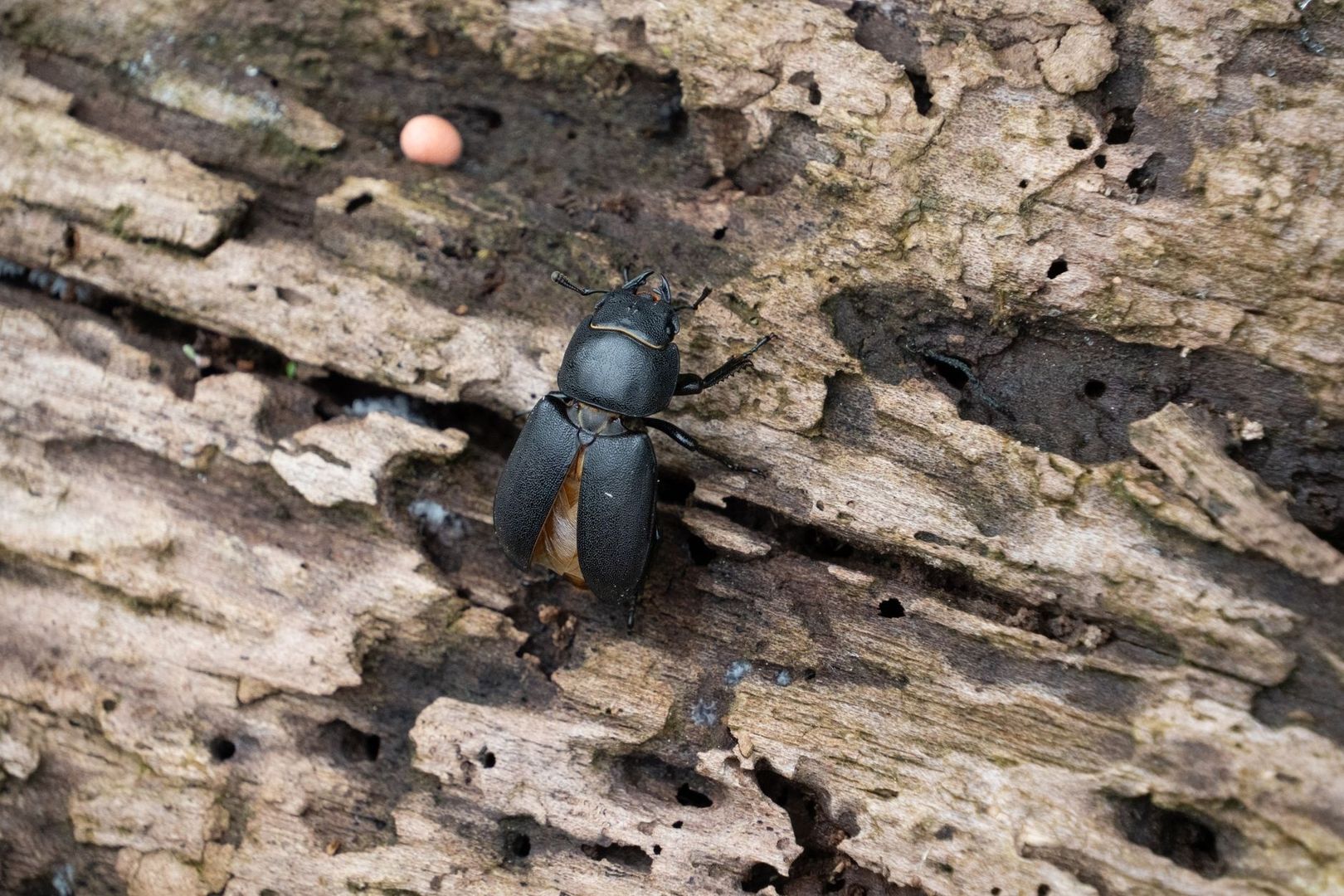
Look closely at a fallen branch, an old stump, or a patch of pasture manure and a construction project is already under way. Beetles are cutting, drilling, tunnelling, rolling, and burying organic material, turning material that appears inert into habitat, nutrients, and soil structure. Saproxylic beetles, which depend on dead or decaying wood, and dung beetles are not minor forest cleaners. They are biological engineers that help determine how carbon, water, oxygen, and minerals move through land.
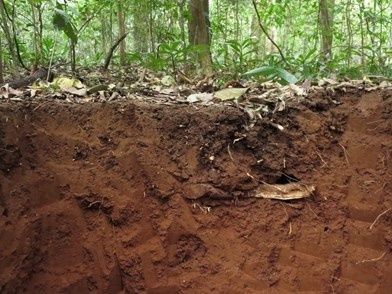
That work matters because soil is not simply weathered rock topped with compost. It is a living structure assembled through countless interactions among roots, fungi, bacteria, earthworms, insects, and decomposing residues. When beetles open channels through wood or carry manure below the surface, they change the physical environment available to microbes and plant roots. Their activity can improve infiltration, create pores, and place nutrients where plants can use them rather than leaving them exposed to erosion or atmospheric loss.
Industrial forestry, intensive grazing, and hyper-sanitized woodland management have often removed the very materials these insects require. Dead limbs are cleared, old stumps are ground away, pasture manure is treated with persistent chemicals, and field edges are simplified. Reframing beetles as silent architects offers a practical alternative. Smallholders, gardeners, and community woodland stewards can support these workers with modest changes that retain habitat, protect organic inputs, and reduce unnecessary toxicity.
Saproxylic Engineers and the Physics of Wood Decomposition
Freshly fallen wood presents a difficult meal. Its cellulose and lignin form a dense structural matrix that resists rapid breakdown, especially in large branches and logs. Saproxylic beetles begin changing that physical barrier as they chew galleries, bore entrance holes, and excavate feeding chambers. These openings increase the internal surface area of the wood and allow moisture, oxygen, bacteria, and fungi to penetrate more deeply.
The beetles do not decompose timber alone. Their galleries act as access routes within a wider succession. Fungi soften and chemically alter wood fibres, while bacteria and other invertebrates use the newly available spaces. As decay advances, the material loses density, holds moisture more readily, and gradually becomes friable enough to mix with mineral soil. The result is not an overnight transformation but a multi-year process in which insects help create the conditions for microbial decomposition and nutrient release.
Species are not interchangeable. Some beetles prefer recently damaged branches with intact bark, while others depend on wood that has already been softened by fungi. A 2017 study of neotropical saproxylic weevils examined branches from 41 trees and collected 8,761 beetles representing 91 species. Fourteen species were host specialists, and host plant identity was a stronger determinant of community structure than forest stage. The findings, documented in research on neotropical saproxylic beetle communities, show why diverse deadwood is more valuable than a uniform pile of a single tree species.
| Wood decomposition stage | Typical beetle contribution | Effect on soil processes |
|---|---|---|
| Early stage, recently dead or damaged wood | Entry holes, bark disruption, and initial galleries | Begins moisture and microbial access while distributing fine wood fragments |
| Intermediate stage, partly softened wood | Expanded tunnels and feeding chambers associated with fungi | Increases porosity, surface area, and contact between decomposers and timber |
| Late stage, soft and fragmented wood | Use of decayed material and remaining microhabitats | Helps incorporate carbon-rich fragments into humus and mineral soil |
For land managers, the lesson is straightforward. Deadwood volume matters, but its variety matters too. A large log, a standing snag, a shaded branch, a sun-warmed stump, and a partially buried root each provide different moisture conditions and decay stages. A review of deadwood ecology in European forests emphasizes that continuity, size, decomposition stage, and associated microhabitats help shape saproxylic communities. Removing every fallen limb therefore removes not only fuel or clutter, but also an entire sequence of biological work.
Dung Beetles and the Mechanics of Nutrient Integration
Dung beetles perform a comparable engineering service in pasture and open woodland. Instead of waiting for manure to dry on the surface, they relocate it. Rollers form portions into balls and move them away from the pat, tunnelers carry material vertically into the soil, and dwellers live and reproduce within the manure itself. These functional guilds differ in behaviour, but all help connect surface organic matter with the root zone.
Burying manure can reduce the time available for volatile nitrogen compounds to escape and can interrupt the breeding habitat of some nuisance flies. More importantly, the tunnels create channels through compacted soil. Those channels improve gas exchange, help water move downward, and provide routes for roots and microorganisms. In semiarid pasture experiments involving the dung beetle Canthon humectus, beetle activity increased soil nitrogen and ammonia, while corn grown with beetle-buried manure grew larger and faster than corn grown with manure but no beetles.
These effects are especially valuable where rainfall is limited or intense storms alternate with dry periods. A manure pat left on the surface can form a hard crust that restricts oxygen and interferes with seedling emergence. Once buried, the same material becomes a more evenly distributed resource. The value of dung beetles can be understood through several linked services:
- Nutrient placement: Manure is moved closer to roots and soil microorganisms instead of remaining concentrated on the surface.
- Porosity and aeration: Vertical tunnels create air spaces and reduce the effects of surface compaction.
- Water movement: Burrows can improve infiltration and hydraulic connectivity, although results depend on soil type and rainfall.
- Pest regulation: Rapid burial reduces the exposed manure habitat available to some flies and parasites.
- Plant establishment: Incorporated manure can support germination and early growth by reducing crusting and improving nutrient access.
These benefits do not mean every pasture should be stocked heavily or disturbed to create beetle habitat. Beetles need manure, but they also need suitable moisture, undisturbed soil, and a chemical environment that allows larvae and adults to survive. Their work is strongest when grazing management and parasite control protect the entire life cycle.
The Hidden Cost of Chemical Interventions on Soil Architecture
Livestock parasiticides can create an unseen ecological cost. Broad-spectrum insecticides and some avermectin treatments may pass through animals and remain active in manure after application. When beetles encounter contaminated pats, reproduction, larval development, feeding, or adult survival may decline. A product that appears to solve an immediate animal-health problem can therefore weaken the insects responsible for recycling the resulting manure.
The loss is cumulative. Fewer dung beetles mean more manure remains on the surface, where it dries into crusts, loses nutrients, and occupies grazing area. Reduced tunnelling can contribute to poorer infiltration and less biological porosity, especially where livestock traffic already compacts the soil. As nutrient cycling slows, land managers may compensate with additional fertilizer, mechanical aeration, or repeated pasture renovation. Those inputs can address symptoms without restoring the underlying biological workforce.
Integrated pest management does not mean ignoring parasites. It means matching treatment to demonstrated need, using monitoring and animal-health advice, and selecting methods with lower consequences for non-target organisms. The NRCS pasture IPM guidance describes an enhancement approach that reduces harmful broad-spectrum treatments, supports rotational grazing, maintains plant diversity, and uses written records to track implementation.
- Monitor livestock condition and parasite pressure rather than treating every animal automatically.
- Ask a veterinarian about targeted, timed treatments and alternatives compatible with local parasite risks.
- Record product names, active ingredients, dates, and treated animals so effects can be reviewed.
- Use rotational grazing and adequate recovery periods to interrupt parasite cycles and protect forage.
- Assess soil cover, surface crusting, infiltration, residue breakdown, roots, aggregates, and visible biopores.
Soil assessment should remain practical and cautious. The USDA Natural Resources Conservation Service notes that field indicators are diagnostic rather than a complete account of every biological, chemical, and physical process. A simple comparison of infiltration after rain, manure disappearance, surface hardness, root depth, and aggregate stability can still reveal useful trends. Laboratory testing is appropriate for nutrients, pH, salinity, and other properties that cannot be judged reliably by eye.
A Land Steward Playbook for Restoring Subterranean Habitats
Restoration begins with retention. In a woodland, leave some standing dead trees where safety allows, retain fallen logs, and avoid treating every branch pile as a management failure. In gardens and field margins, place nurse logs in contact with the soil, build loose brush piles, and leave partially buried wood stubs. Use several sizes and decay stages rather than constructing a single uniform stack. Moist shaded material and sun-exposed material serve different beetle communities.
Pasture management requires equal attention to manure and timing. Avoid routine chemical treatments that harm dung fauna, but make changes with qualified animal-health guidance. Rotational grazing can distribute manure and allow recovery of forage, while plant diversity supplies better cover and a broader root environment. The precise interval should fit climate, soils, stocking rate, and parasite pressure. The NRCS enhancement framework includes documented grazing plans and recovery periods, but local technical assistance is essential before adapting any prescription.
A small parcel can begin with a simple baseline. Photograph a few fixed soil locations, note the amount and condition of deadwood, mark manure pats, and record how quickly pats disappear after grazing. Recheck during comparable seasons. The aim is not to produce a perfect inventory, but to notice whether biological processes are becoming more visible and reliable.
- Map existing habitat. Identify fallen wood, stumps, shaded edges, wet spots, compacted gateways, and areas where manure accumulates.
- Protect what remains. Stop unnecessary removal of deadwood and avoid disturbing stable soil around logs, field edges, and pasture margins.
- Add structural variety. Create nurse logs, brush piles, and small deadwood islands using locally available untreated wood.
- Review chemical practices. List livestock treatments and garden pesticides, then seek lower-risk, targeted options where monitoring supports them.
- Improve grazing distribution. Use planned movement, adequate recovery, and plant diversity to reduce compaction and spread nutrient inputs.
- Measure biological response. Track manure breakdown, infiltration, surface crusting, visible galleries, beetle activity, root depth, and soil aggregation.
Safety remains part of stewardship. Do not retain unstable trees near buildings, roads, or public paths, and do not move diseased wood in ways that could spread serious pests. Avoid importing manure or logs without understanding local biosecurity rules. Habitat restoration works best when it respects both ecological processes and the practical responsibilities of land ownership.
Cultivating Living Ground Through Patient Stewardship
Healthy soil is built by organisms that rarely appear in farm accounts or woodland management plans. Beetles convert wood and manure into accessible habitat, nutrients, and pores, while fungi, bacteria, roots, and other invertebrates continue the process. Protecting those relationships is often less expensive than replacing them with machinery and purchased inputs.
The most useful next step is careful observation. Leave a log, watch a manure pat, test infiltration before and after a grazing change, and compare soil crumbs from protected and heavily trafficked areas. Small adjustments compound across seasons. By treating deadwood and dung beetles as infrastructure rather than waste, land stewards can build ground that holds water more effectively, supports deeper roots, stores carbon, and remains biologically active through drought and disturbance.