
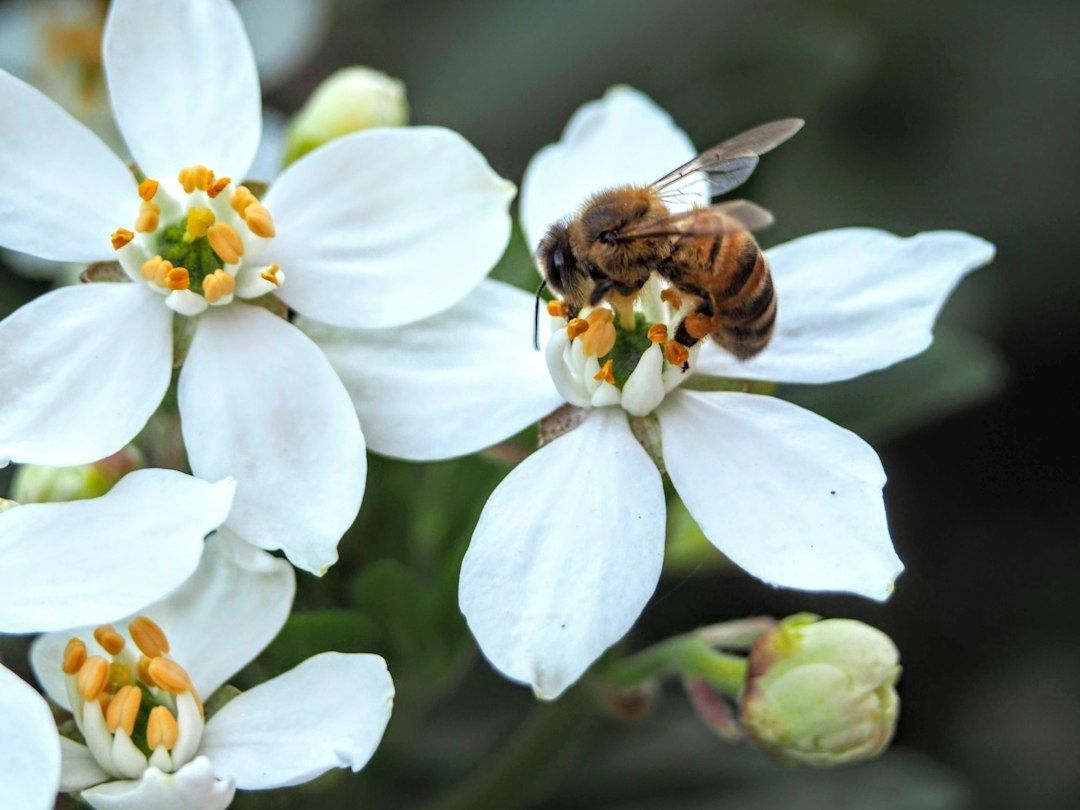
Phenology in Practice: Documenting the Shifting Calendars of Native Pollinators
When Spring Arrives Ahead of Its Gardeners
Spring rarely announces itself with a single dramatic event. It gathers quietly along a forest floor, in the swelling buds of a backyard shrub, and in the first warm hours when a solitary bee leaves its sheltered nest. A trout lily opens after sunlight reaches its petals. A maple unfurls leaves. A small mining bee appears above a patch of bare soil. Each observation is modest on its own, yet together these events form a local seasonal calendar. Recording that calendar is a practical way to understand how weather and climate are reshaping the living landscape.
The relationship between early-blooming plants and native solitary bees depends on timing. Flowers must provide pollen and nectar when bees are active, while bees must be present to pollinate flowers during their receptive period. A few unusually warm days can shift one partner faster than the other, creating a gap that may be difficult to see without careful records. That is why the naturalist’s role matters. A consistent field note can reveal a gradual change long before a dramatic weather headline makes the pattern obvious. By linking observations to a native pollinator monitoring guide, community observers can turn local attention into useful stewardship data.
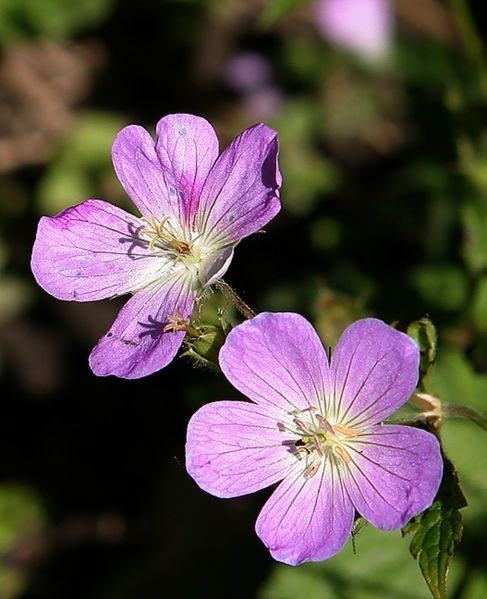
The Biology of Mismatch in Early Season Mutualisms
Plants and insects do not read the same seasonal signals. Many woody plants respond strongly to accumulated warmth, often described as growing degree days, while soil-nesting bees experience a more complicated set of conditions. Soil temperature, nest depth, moisture, winter survival, solar exposure, and the availability of food for developing larvae can all influence emergence. A warm spell may accelerate bud development on a south-facing shrub without warming a shaded nesting bank enough to release the bees that depend on its flowers.
This difference in thermal sensitivity can produce a phenological mismatch. Floral opening may outpace insect emergence, leaving early flowers with fewer visits during their brief peak. The reverse can also occur: bees may emerge during a warm interval, only to encounter closed flowers, cold rain, or a late frost. The problem is not always a complete separation of partners. A plant and its pollinator may still occupy the same garden or preserve, but their interaction can weaken because flowers offer less accessible pollen, bees encounter fewer suitable blossoms, or activity periods overlap for fewer hours.
Specialized early-season pollinators face the narrowest nutritional margins. Mining bees may collect pollen from a limited group of spring plants, while mason bees depend on a nearby sequence of blooms to provision nests efficiently. When a preferred plant flowers before females are active, the loss is not simply a missed visit. It can mean longer foraging flights, lower energy reserves, delayed nesting, and fewer well-provisioned offspring. A review of this wider issue, Global warming and plant-pollinator mismatches, explains that warming can disrupt mutualisms through changes in timing, behavior, morphology, resource quality, and attraction. The same review also emphasizes that generalist networks may show resilience because some pollinators can switch partners, although that flexibility does not protect every specialist.
- Plant cues: accumulated heat, day length, winter chilling, soil moisture, and exposure to sunlight.
- Bee cues: nest temperature, adult survival, larval development, local shelter, and the availability of pollen and nectar.
- Landscape conditions: mowing, flooding, pesticide exposure, compacted soil, and the distance between nesting and flowering habitat.
Long-term evidence shows that change is measurable but not uniform. A study of museum and contemporary records for ten generalist bee species in northeastern North America found that bee activity advanced by an average of about 10.4 days between 1880 and 2010, with much of the shift occurring after 1970. Comparable plant records did not show a simple, universal divergence from bee timing. In some cases plants advanced faster, and in others bees did. That uncertainty is precisely why local monitoring matters. Broad averages can identify regional tendencies, but repeated observations at a particular preserve or garden reveal which relationships are most vulnerable there.
Standardized Protocols for Backyard and Trailside Observers
Reliable phenology does not require expensive equipment. It requires repeatable choices. Select several native perennial plants that are common enough to revisit and important enough to matter for local pollinators. Choose plants with different flowering periods, and record their exact location, habitat exposure, and approximate size. A plant beside a south-facing wall should not be treated as equivalent to the same species in a shaded woodland hollow.
- Mark the observation plants. Use a discreet label, map point, or photograph so the same individuals can be revisited. Record species, site conditions, elevation if relevant, and whether irrigation or maintenance affects the plant.
- Set a consistent observation window. Visit at roughly the same part of the day, preferably during peak solar hours when conditions are warm and dry. Note cloud cover, wind, temperature if available, and recent rain.
- Record floral phenophases. Distinguish swollen buds, first open flower, approximately one-quarter and three-quarter bloom, peak bloom, fading flowers, and terminal petal drop. Use clear definitions rather than impressions such as “looks nearly finished.”
- Survey pollinator activity without disturbing nests. Watch for several minutes before moving closer. Record whether bees are basking, collecting pollen, carrying dry or visibly packed loads, drinking nectar, investigating flowers, or entering soil cavities.
- Document effort and uncertainty. Write down the duration of the visit, the number of observers, weather interruptions, and identification confidence. A record marked “likely mining bee” is more valuable than an overconfident incorrect species name.
Observation windows should be calibrated around favorable foraging conditions, not merely convenience. Many solitary bees are far less visible during cool, overcast, or windy weather, even when flowers are open. A cold morning with no bee activity should not be interpreted as evidence that bees are absent. It is a measurement of conditions at that time. Repeating a visit after sunlight reaches the site can separate a weather effect from a true seasonal pattern.
Plant records become especially useful when phenophases are recorded separately for each individual. Note the first open flower, the date when several flowers are available, the date of maximum display, and the end of flowering. For bees, record abundance in cautious categories or counts, such as zero, one to five, six to twenty, or more than twenty individuals during a fixed observation period. Avoid handling bees or opening nests. Pollen visibility can be recorded as absent, uncertain, or clearly visible, with color and placement noted when possible.
The USA National Phenology Network provides a useful framework for thinking about spring onset through First Leaf, First Bloom, and Late Bloom indices. These modeled products combine historical observations with temperature and weather data, and they can be compared with direct Nature’s Notebook observations. Such frameworks remind observers that a phenology record is not a casual date in a diary. It is a structured measurement that becomes more powerful when the same definitions are used across places and years.
Connecting Local Notebooks to Regional Monitoring Networks
A notebook kept beside a garden path can contribute to regional science when it includes location, date, species, observation method, and confidence. Researchers can combine many such records to identify advancing spring conditions, compare elevations, test climate models, and locate places where habitat management should be prioritized. The value comes from accumulation. One observation may describe one plant, but hundreds of consistent observations can reveal whether a watershed is changing at the same pace as a regional model predicts.
Several monitoring approaches serve different purposes. Nature’s Notebook emphasizes standardized plant and animal life-cycle observations. The USA National Phenology Network also develops mapped spring indicators that help communicate broad seasonal conditions. Oregon Season Tracker combines plant phenology with precipitation measurements gathered by volunteers across urban, rural, and natural settings. Its community-based model, described in Oregon Season Tracker engages community to advance climate science, shows how local observations can support climate research, natural resource planning, and long-term ecological studies.
| Monitoring approach | Primary strength | Useful observer practice |
|---|---|---|
| Nature’s Notebook | Consistent life-cycle observations for plants and animals | Use defined phenophases and revisit marked individuals |
| USA National Phenology Network indices | Regional visualization of modeled spring onset | Compare local dates with maps and long-term normals |
| Oregon Season Tracker | Linked precipitation and native plant observations | Follow equipment and recording standards carefully |
| Local stewardship logs | Fine-scale habitat and pollinator context | Record management, exposure, nesting habitat, and effort |
Before submitting records, check four essentials: correct species identification, an unambiguous date, a precise location, and a description of the observation method. Photographs should include enough context to show the plant or habitat, not only a close-up of a flower. If the site was mowed, irrigated, burned, flooded, or treated with any pesticide, record that information. These details help analysts distinguish biological change from a management event.
Consistency across years is more important than collecting a large number of observations during one unusual spring. A five-minute visit every few days can produce a stronger time series than a single intensive survey. Keep the same plant markers, preserve original entries, and note missed visits rather than filling gaps from memory. Over time, the record can show whether flowering is becoming earlier, whether bee activity is compressed into a shorter window, or whether a late-season bloom is sustaining pollinators after an early flush has ended.
Practical Habitat Calibration for the Changing Seasons
Monitoring should lead to habitat decisions, but it should not be used to justify rushed intervention after every unusual weather event. The goal is a resilient sequence of resources. Plant for overlapping bloom periods rather than a single impressive flowering display. Include early native ephemerals, midseason perennials, shrubs, and late-season asters or other locally appropriate plants. A continuous sequence gives early-emerging bees alternatives when one species flowers too soon or is damaged by frost.
- Protect cold-hardy native ephemerals and other early flowers that provide pollen before trees and summer perennials dominate.
- Maintain several plant species in each flowering period so a single weather-sensitive species does not create a complete resource gap.
- Leave undisturbed, well-drained bare ground for mining bees, avoiding unnecessary mulch, compaction, and spring digging.
- Retain hollow stems, pithy stalks, leaf litter, and coarse woody material where they provide shelter for cavity-nesting or overwintering insects.
- Reduce pesticide exposure, especially during active flowering and peak bee emergence.
Habitat calibration also means protecting transition windows. A municipal preserve may benefit from delayed mowing until observers confirm that early flowers have finished and ground-nesting bees have completed a critical activity period. A residential garden can leave a small patch of bare soil intact instead of covering every bed with dense mulch. Hollow stems can remain standing through winter and early spring, then be cut only after records or local guidance indicate that nesting activity has ended.
Management should respond to local evidence. If records show that flowers are consistently opening before pollinators appear, add more cold-tolerant native plants, protect sheltered nesting areas, and avoid removing leaf litter too early. If bees emerge while little is in bloom, prioritize early nectar and pollen sources and examine whether mowing or ornamental planting has eliminated the first seasonal resources. These adjustments are modest, but repeated across gardens, parks, school grounds, and rights-of-way, they can strengthen the connected habitat that native pollinators need.
Do not assume that earlier is always better. A plant that flowers unusually early may be exposed to frost, while a bee that emerges too soon may face cold rain and depleted food. The practical objective is diversity in timing and structure, not an artificially accelerated spring. Native plants with different responses to temperature, moisture, and day length can spread ecological risk across the season.
Transform Your Observations Into Resilient Habitats
The observant naturalist serves as an ecological anchor between daily experience and long-term conservation. A dated note about the first mason bee, the last open flower, or a week without suitable forage may appear small, but it preserves information that cannot be reconstructed later. When those notes use consistent methods, they become evidence of how a particular place is responding to changing seasons.
Begin before the next seasonal shift by selecting a few native plants, marking their locations, and preparing a simple field sheet with dates, phenophases, weather, pollinator activity, and management notes. Submit suitable records to a regional monitoring network, share patterns with local land managers, and use the results to refine planting and maintenance decisions. Stewardship becomes stronger when observation and action form a continuous loop: watch the season, document the change, protect the habitat, and return to see what follows.
By Magnus
- 25, Sep, 2026
- 0 Comments