
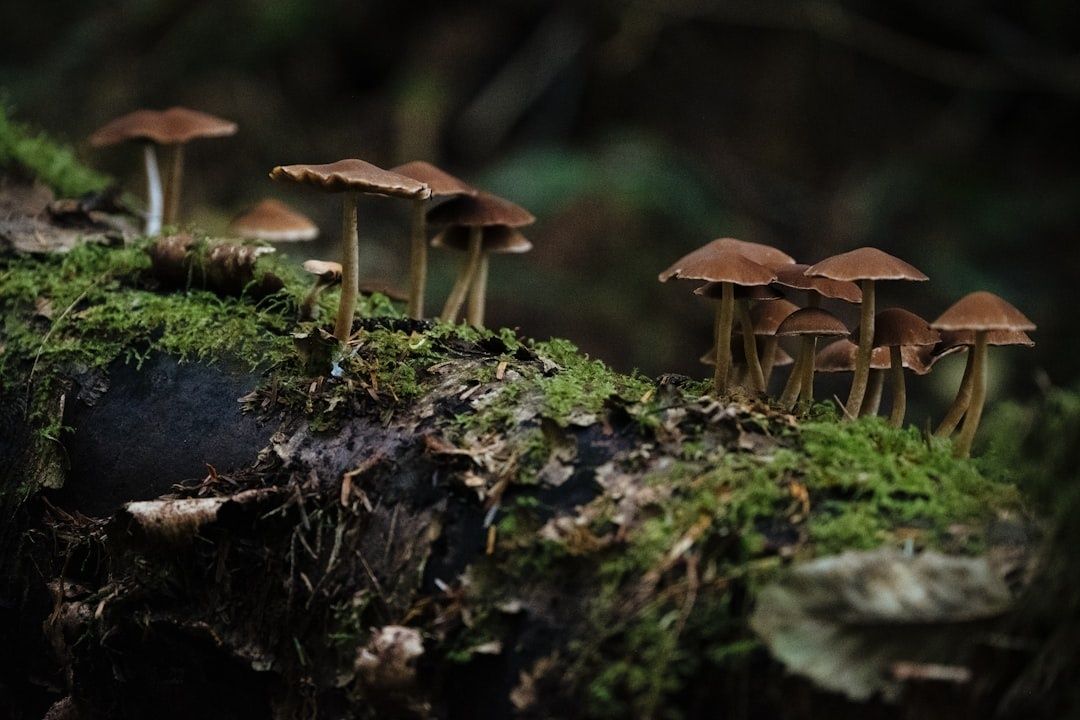
The Forest Floor Network: How Underground Fungi Keep Woodlands Resilient
Beyond the Metaphor of the Underground Network
The phrase “wood wide web” has helped bring attention to the living soil beneath forests, but it can also make fungal ecology sound more mysterious and coordinated than it really is. Woodland fungi do not operate as a single underground internet with a central intelligence. They form physical networks of microscopic threads, called hyphae, that grow through soil, organic matter, and root tissues. Their effects are biological, measurable, and highly dependent on species, moisture, soil chemistry, disturbance, and seasonal conditions.
For community arborists, land conservationists, woodland owners, and regenerative land stewards, this distinction matters. Mycorrhizal fungi form partnerships with living roots. In exchange for plant-derived sugars, they help gather water and mineral nutrients from a much larger volume of soil than roots could explore alone. Protecting that partnership is not an ornamental addition to tree care. It is part of maintaining the physical soil structure, nutrient cycling, and drought tolerance on which a healthy canopy depends. The practical question is therefore not whether a woodland has an attractive fungal story, but whether its soil still provides the habitat in which fungal networks can grow, connect, and recover.
The Biology of Hyphae and Aggregate Soil Formation
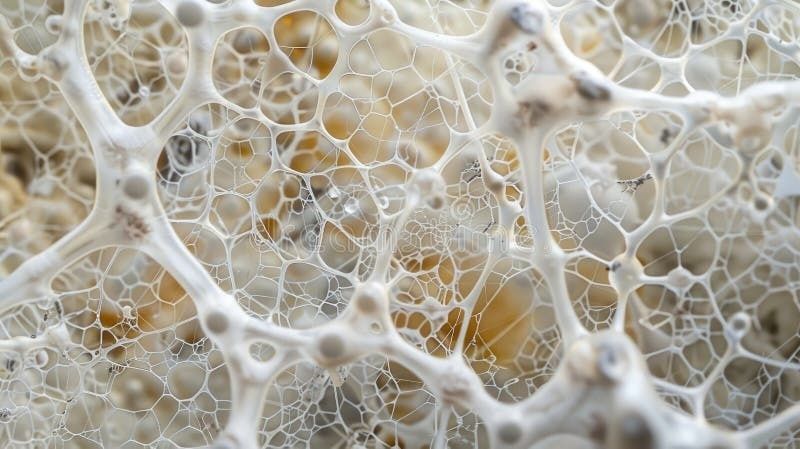
Hyphae are fine, branching filaments that can move through pores between mineral particles, decaying leaves, dead wood, and root surfaces. A single fungal network may occupy an intricate three-dimensional space that is largely invisible from the surface. As hyphae extend, they physically bind particles together and create contact points between mineral soil and organic residues. This process contributes to the formation of aggregates, small clusters of soil particles that are more stable than loose grains.
Mycorrhizal roots reinforce this structure through both physical growth and chemistry. Fungi release compounds that help particles adhere, while decomposing fungal material adds organic carbon to the soil. Arbuscular mycorrhizal fungi are especially associated with glomalin-related soil proteins, a group of persistent compounds linked to aggregate stability. The term glomalin is sometimes used too broadly, and field measurements can be technically complex, but the management principle is clear: living roots, fungal biomass, and organic matter work together to build a more coherent soil matrix.
Stable aggregates create a useful pattern of pore spaces. Larger pores allow air movement and drainage, while smaller pores retain water that roots and microbes can access between rainfall events. This balance is essential in woodland soils, where roots need oxygen as well as moisture. Compaction collapses those spaces; bare soil can crust at the surface; and repeated disturbance can interrupt the continuity of hyphal growth. Studies documenting hyphal network dynamics are examining how fungal symbioses may help trees withstand drought, including research on Joshua trees exposed to increasing heat, prolonged dry periods, wildfire, and development pressure.
- Hyphae extend the effective soil-exploring area of roots.
- Fungal compounds and biomass help stabilize soil aggregates.
- Aggregate structure supports both water retention and aeration.
- Undisturbed organic layers provide food and habitat for fungal growth.
These benefits are not automatic. Fungal communities differ between sites, and a tree may not associate equally well with every available fungus. Local species, host compatibility, soil pH, temperature, and moisture all influence the outcome. That is why importing a generic inoculant cannot replace careful attention to native soil, existing vegetation, and the conditions that allow resident fungi to persist.
Resource Buffering and Water Transport in Stressed Canopy Systems
During a dry spell, a mycorrhizal network can help distribute access to water across the root zone, although it should not be treated as a guaranteed irrigation system. Fungal hyphae are narrower than roots and can enter small soil pores that roots cannot reach. In some ecosystems, water taken up in deeper or moister microsites may become available to plants connected to the fungal network. The broader process, often described as hydraulic redistribution, depends on soil continuity, fungal identity, root physiology, and the timing of water availability.
The exchange is also nutritional. Plants provide carbohydrates produced through photosynthesis, while fungi can assist with the acquisition of phosphorus, nitrogen, and micronutrients. Under a closed canopy, neighboring trees may compete for light, water, and minerals, yet fungal connections can also create pathways through which carbon and nutrients move. The direction and ecological importance of that movement vary widely, so managers should avoid assuming that every connected tree benefits equally. The reliable lesson is that a diverse, living root and fungal community gives the woodland more biological options when conditions change.
Ectomycorrhizal and arbuscular mycorrhizal fungi perform related partnership functions but occupy different biological niches. Matching management expectations to the dominant fungal type helps prevent oversimplified restoration plans.
| Feature | Ectomycorrhizal associations | Arbuscular mycorrhizal associations |
|---|---|---|
| Common host groups | Many oaks, birches, beeches, pines, and other woody plants | Many grasses, herbs, shrubs, and tree species |
| Root relationship | Fungi form a sheath around roots and grow between root cells | Fungi enter root cells and form finely branched exchange structures |
| Typical soil role | Strong involvement in organic matter and nitrogen acquisition in many woodland soils | Important phosphorus acquisition and aggregate formation, especially in mineral soils |
| Management priority | Retain woody litter, mature host trees, and intact forest floor habitat | Protect living roots, reduce soil disturbance, and maintain diverse ground vegetation |
Climate resilience is therefore a matter of buffering rather than invulnerability. A fungal partnership may improve access to scarce resources, but it cannot compensate indefinitely for severe root damage, a drained watershed, repeated canopy removal, or a soil profile stripped of organic matter. Research supported by the U.S. Bureau of Land Management on Joshua tree fungi reflects this practical uncertainty: scientists are testing whether fungal communities differ across climates, whether particular fungi improve drought resistance, and whether inoculation can assist restoration after fire or human disturbance.
Ground Disturbances That Sever Subterranean Architecture
Mechanical compaction is among the most persistent threats to woodland soil. Heavy machinery, repeated vehicle traffic, construction staging, and even frequent foot traffic on wet ground can compress aggregates and reduce pore connectivity. The damage may remain long after the surface appears stable. Roots encounter greater resistance, oxygen becomes less available, water may run off instead of infiltrating, and fungal hyphae lose the continuous pathways needed to colonize new root growth.
Tillage causes a different but related disruption. Turning soil breaks fungal filaments, exposes organic matter to rapid decomposition, and repeatedly resets the biological succession that supports woodland establishment. Synthetic fertilizer can also alter the partnership. High applications of readily available nitrogen or phosphorus may reduce a plant”s incentive to invest carbon in mycorrhizal fungi, leading to lower colonization in some settings. Fertilizer responses depend on dose, timing, soil type, and species, but routine application without soil testing can weaken rather than strengthen the biological system.
Former pasture presents an additional establishment barrier. Dense grasses compete directly with young saplings for moisture and nutrients, while their established root mats occupy much of the upper soil. A grassland may have abundant fungal life, but its dominant fungal community is not necessarily suited to newly planted woodland species. If the site has also been grazed heavily or compacted, young trees face both immediate competition and a degraded root environment. The transition requires more than placing seedlings in holes and waiting for a forest to appear.
- Keep machinery off wet ground whenever possible.
- Use permanent access routes rather than driving across the planting area.
- Avoid broad tillage when targeted vegetation control can achieve the same goal.
- Base fertilizer decisions on soil testing and identified deficiencies.
- Inspect compacted zones before planting, especially near gateways, tracks, and livestock watering points.
Plastic mulch may suppress competing vegetation, but it can also create disposal problems, restrict gas exchange if poorly installed, and fragment into persistent pieces. Organic mulches require more careful sourcing and maintenance, yet they can feed soil organisms while allowing rainfall and air to move into the root zone. The appropriate choice depends on local climate, fire risk, available materials, and the ability to keep mulch away from direct contact with tree stems.
Actionable Field Principles for Woodland Stewards
Begin with observation rather than intervention. Map compaction, drainage, existing trees, ground vegetation, erosion, and areas where leaf litter or woody debris already accumulates. A simple soil pit can reveal whether aggregates crumble naturally, whether roots are concentrated near the surface, and whether compacted layers restrict drainage. Laboratory tests can add information about pH, organic matter, nutrients, and texture, but field structure and moisture behavior are equally important.
Low-impact preparation usually protects more biology than aggressive clearing. Flattening or cutting competing grass, opening small planting windows, and leaving undisturbed strips between rows can reduce competition without exposing the entire site. Locally sourced leaf litter, small branches, and coarse woody debris provide habitat for decomposers and help moderate temperature and moisture. Materials should be free of invasive seeds, contaminated soil, and chemical residues. Healthy woodland soil can contain useful native fungi, but moving soil between sites also carries pathogens and invasive organisms, so transfers should follow local biosecurity guidance.
Natural inoculation is often strongest when the site offers the right conditions. Moisture, woody carbon, living host roots, and shelter from repeated disturbance give local fungi an opportunity to colonize naturally. Commercial mycorrhizal products may have a role in specific restoration projects, especially where native inoculum has been lost, but product claims should be checked against the host species, fungal type, application method, and local evidence. More inoculum is not automatically better. Habitat quality determines whether introduced organisms survive.
- Assess the site before planting. Record soil texture, compaction, drainage, existing vegetation, erosion, and nearby woodland sources of native fungal communities.
- Reduce competition with minimal soil exposure. Cut, flatten, or selectively suppress grass around planting zones rather than cultivating the entire field.
- Build a breathable organic layer. Apply locally appropriate leaf litter, chips, sticks, and coarse woody debris in a broad, moderate layer, keeping material several inches away from trunks.
- Plant a diverse set of locally adapted hosts. Species diversity supports a wider range of root and fungal partnerships and reduces dependence on one climate-sensitive tree.
- Protect moisture and soil continuity. Use contour-based water management where appropriate, maintain access alleys, and prevent machinery traffic across wet ground.
- Monitor through multiple seasons. Check survival, shoot growth, leaf color, soil moisture, mulch decomposition, browsing, and competing vegetation. Adjust gradually rather than disturbing the whole site again.
On former pasture, a sequential approach is especially valuable. First stabilize runoff and reduce compaction. Then establish mulch and woody habitat before or alongside planting, allowing fungal and invertebrate communities to develop. Protect young trees from grass competition and browsing, but retain some ground cover to prevent erosion. As roots expand, spacing and management should encourage connection between planting groups while preserving open areas for access and future thinning.
Coarse woody debris deserves particular attention. Logs, branches, and mixed-size chips decompose at different rates, creating a long-term sequence of moisture pockets, fungal habitat, and nutrient release. Fine mulch alone can mat or decompose quickly; large logs alone may not protect the immediate root zone. A mixture often works better, provided it does not create excessive fire risk or harbor pests near valuable trees. In community projects, this material can often be sourced from local pruning operations, turning an unavoidable waste stream into a soil-building resource.
Cultivating Woodlands from the Ground Downward
Resilient woodland management begins with a change in emphasis. Tree planting is visible and easy to count, but survival depends on less visible conditions: connected pores, stable aggregates, living roots, organic residues, and fungal partners suited to the site. A sapling installed in compacted, biologically depleted soil may receive excellent aftercare and still struggle. A sapling planted into a protected, well-structured root zone has a stronger foundation from which to respond to heat, drought, competition, and seasonal variability.
The next practical step is a hands-on soil health assessment. Walk the site after rain and during a dry period. Dig small inspection pits, examine root distribution, look for earthworms and fungal threads, test whether water infiltrates or ponds, and identify where machinery or livestock have altered the ground. Protect the areas that already function well, repair damaged zones slowly, and treat every mulch layer, access route, and planting decision as part of the woodland”s subterranean architecture. Climate resilience is built from the ground downward, one intact soil aggregate and one preserved hyphal pathway at a time.
By Magnus
- 16, Sep, 2026
- 0 Comments